How Jurisdictional Approvals Time the Rollout of Real-Time Payout Tools in Certified Handheld Wagering Apps During Peak Tournament Windows
Viktor Coleman · Oct 24, 2026
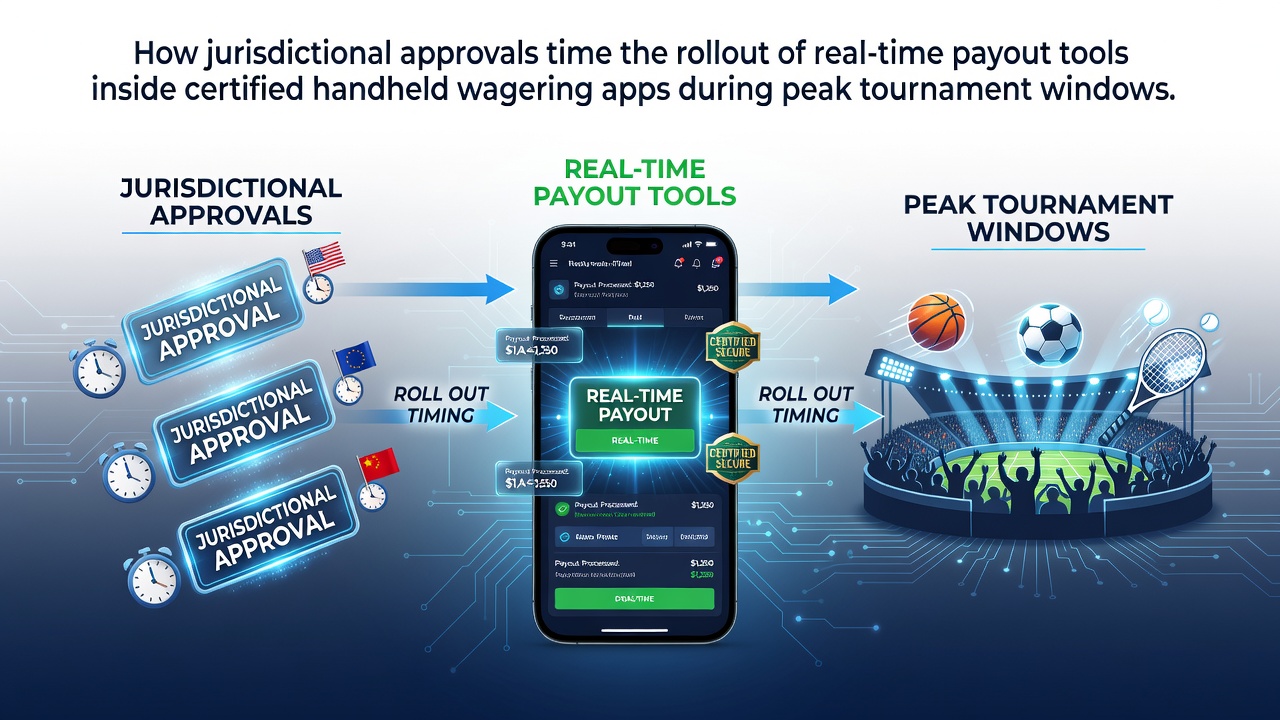
How Jurisdictional Approvals Time the Rollout of Real-Time Payout Tools in Certified Handheld Wagering Apps During Peak Tournament Windows
Regulatory bodies across multiple regions establish approval sequences that directly control when real-time payout functions enter certified handheld wagering applications, and these sequences often align with or diverge from major tournament calendars. Developers submit documentation detailing encryption standards, transaction logging protocols, and integration with licensed payment processors before any update reaches end users on mobile platforms. The Alcohol and Gaming Commission of Ontario requires separate reviews for each payout module, which means operators cannot activate instant settlement features until inspectors complete technical audits that typically span six to eight weeks.
Approval Pathways Across Jurisdictions
State and provincial regulators maintain distinct certification tracks that determine deployment schedules for live payout tools. In Pennsylvania, the Gaming Control Board evaluates software updates through a staged process that includes sandbox testing followed by live environment validation, while Australian state commissions such as the Victorian Commission for Gambling and Liquor Regulation apply parallel scrutiny to financial reconciliation modules. These layered reviews create staggered release windows that operators must map against tournament schedules, because missing a single certification deadline can push feature availability past high-volume periods like October 2026 playoff rounds.
Technical Certification Steps
Engineers prepare source code packages that demonstrate compliance with jurisdiction-specific rules on funds segregation and audit trails, then submit these packages to independent testing labs before regulators issue final sign-off. Observers note that each jurisdiction adds unique requirements, for example one region may demand real-time monitoring dashboards while another focuses on reconciliation reports generated at the close of every betting session. When multiple jurisdictions are involved, development teams coordinate parallel submissions so that a single codebase can receive approvals in sequence rather than requiring separate builds for each market.
Alignment With Tournament Calendars
Peak tournament windows compress the available time between regulatory clearance and user activation, because operators want payout tools ready before opening rounds generate large wagering volumes. Data from industry tracking services shows that certification backlogs lengthen when several major events overlap, forcing teams to prioritize jurisdictions that complete reviews fastest. Those who studied rollout patterns in 2025 observed that applications cleared in one region often received secondary approvals in adjacent markets within ten days, provided the core payout architecture remained unchanged.

October 2026 presents overlapping schedules across North American and European events, which places additional pressure on approval pipelines that already operate near capacity. Teams that secure early sign-off in one jurisdiction can sometimes reference that certification when filing in another, although each regulator still conducts its own security assessment. The result is a staggered rollout pattern where users in faster-cleared markets gain access to instant payouts first, while others wait for the next available review slot.
Operational Impacts on Mobile Platforms
Operators adjust marketing and support resources once they receive projected approval dates, because promotional campaigns tied to tournament payouts require confirmed feature availability. Research indicates that applications lacking real-time settlement tools during peak windows experience measurable drops in session duration, since players migrate toward platforms that complete withdrawals without delay. Certification timelines therefore influence not only technical deployment but also broader business planning around staffing, server capacity, and customer communication strategies.
Coordinating Multi-Region Launches
Project managers maintain shared calendars that track submission dates, lab testing windows, and expected regulator response periods across every licensed market. When one jurisdiction grants approval, teams immediately notify partners in neighboring regions so they can reference the completed audit materials. This sequential approach reduces redundant testing yet still respects each regulator's independent authority over local compliance.
Evidence suggests that jurisdictions with digitized submission portals complete reviews more quickly than those relying on paper-based processes, which creates competitive differences in how rapidly operators can activate new payout features. During October 2026, operators expect the gap between fastest and slowest jurisdictions to widen because tournament-driven volume increases the number of simultaneous certification requests.
Conclusion
Jurisdictional approval sequences set the precise rhythm at which real-time payout tools reach certified handheld wagering applications ahead of and during peak tournament periods. Operators that map these sequences against fixed event calendars gain clearer deployment forecasts, while those that miss early submission windows face compressed timelines that limit feature availability when betting activity reaches its highest levels. The interplay between regulatory calendars and tournament schedules continues to shape when users in each market can access instant settlement functions on their mobile devices.