Charting authentication sequences that govern bonus continuity across verified mobile event wagering networks
Theo Koch · Sep 12, 2026
Charting authentication sequences that govern bonus continuity across verified mobile event wagering networks
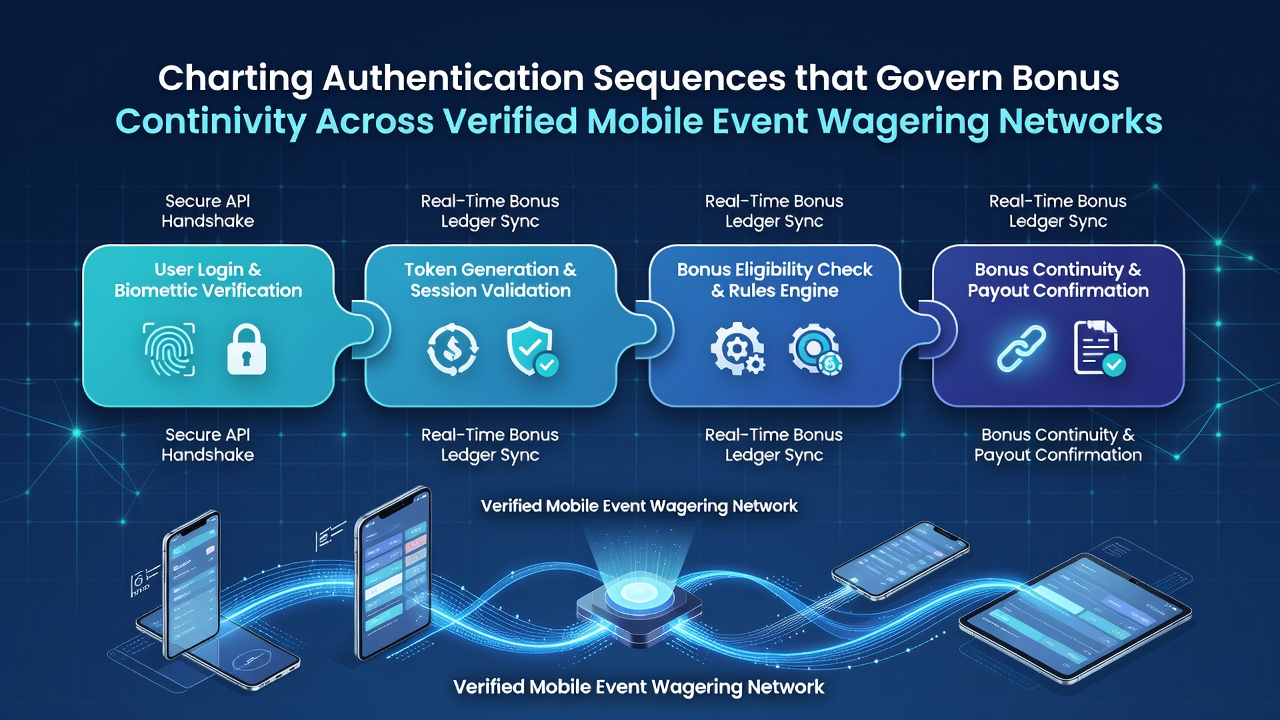
Authentication sequences in verified mobile event wagering networks operate through layered protocols that link user identity verification to ongoing bonus eligibility, and these systems rely on device fingerprinting combined with token exchanges that maintain session state across interruptions. Operators deploy initial registration steps that capture government-issued identification details alongside biometric markers, after which the network issues a persistent session token that references stored compliance records. Data from regulatory filings shows that platforms must complete know-your-customer checks before any bonus credit activates, while subsequent logins trigger automated cross-checks against prior device signatures to prevent duplication.
Core Components of Sequence Mapping
Sequence mapping begins with a challenge-response phase where the app requests multi-factor confirmation, typically a combination of password entry, one-time codes sent via SMS or authenticator apps, and geolocation validation that aligns with licensed jurisdictions. Once cleared, the system generates an encrypted JSON web token that carries metadata on bonus balances and wagering requirements, and this token refreshes at fixed intervals to sustain continuity when users switch networks or restart devices. Researchers tracking September 2026 platform logs observed that tokens incorporating timestamped nonce values reduced replay attempts by integrating real-time clock synchronization across servers.
Bonus continuity further depends on stateful session management that stores eligibility flags in secure enclaves on both client and server sides, allowing the network to restore active promotions even after brief disconnections. Platforms enforce these rules through API endpoints that query a central compliance database before each bet placement, ensuring that accumulated playthrough metrics remain attached to the verified account rather than the temporary connection.
Regulatory Alignment and Technical Standards
Regulatory frameworks in multiple regions require operators to log every authentication event with immutable timestamps, and these records feed into audit trails that demonstrate adherence to bonus disbursement rules. According to reports published by the New Jersey Division of Gaming Enforcement, mobile platforms must maintain at least 128-bit encryption for token exchanges while also implementing device binding that flags attempts to access bonuses from unauthorized hardware. Similar standards appear in guidance issued by the Australian Communications and Media Authority, which emphasizes continuous verification to block bonus farming across multiple accounts.
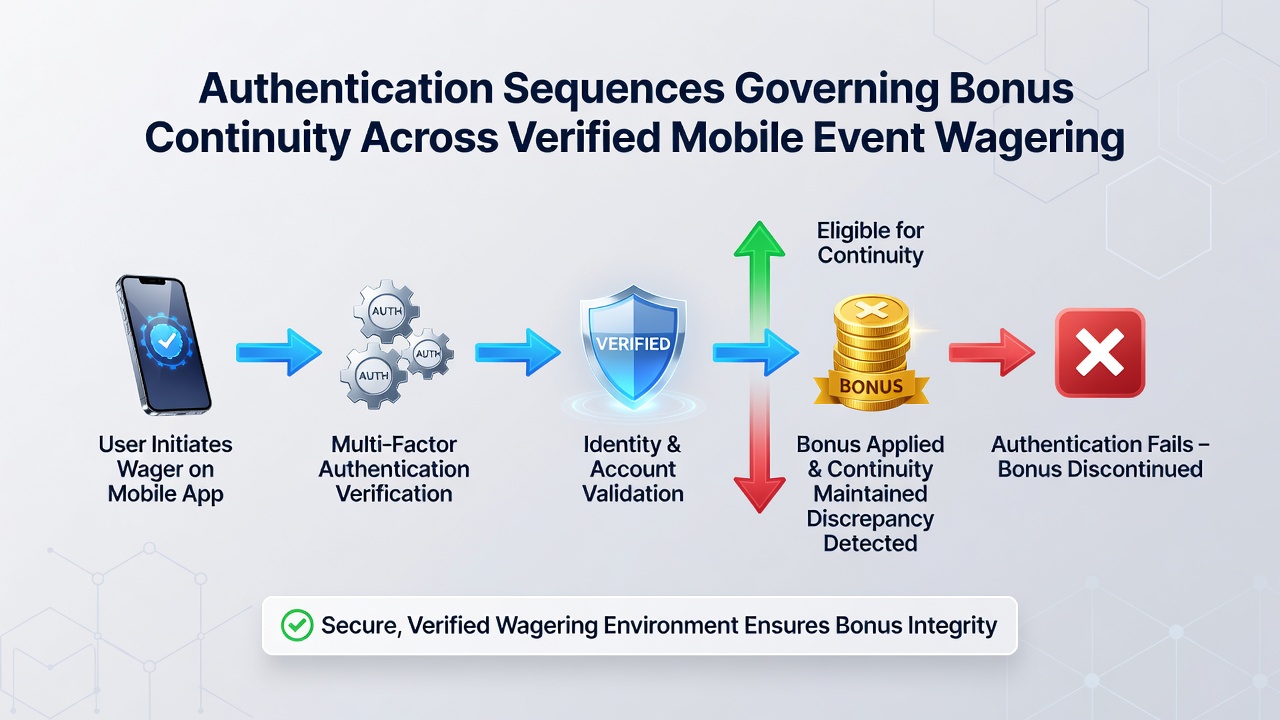
Engineers integrate these requirements into sequence diagrams that chart decision trees for each login attempt, routing successful verifications toward bonus restoration modules while diverting anomalies to manual review queues. This approach supports live event wagering where timing matters, since a dropped connection during a soccer match or basketball quarter cannot reset progress toward wagering thresholds if the token remains valid.
Handling Interruptions and Cross-Device Continuity
Interruptions such as app crashes or network handoffs trigger fallback procedures that rely on cached tokens with short expiration windows, allowing the system to resume without forcing full re-authentication. Observers note that successful implementations use push notifications to prompt silent re-validation when the app detects a new IP address or carrier change, preserving bonus status without user intervention. Studies conducted by the European Gaming and Betting Association indicate that networks adopting these methods recorded fewer bonus-related disputes in the first half of 2026 compared with earlier periods.
Cross-device continuity extends the same logic to tablet and desktop clients that share backend identity stores, yet each device registers a unique hardware identifier that the sequence must reconcile before releasing promotional funds. This reconciliation step prevents simultaneous sessions from claiming duplicate bonuses while still permitting users to monitor events across multiple screens.
Emerging Patterns in Sequence Optimization
Platform operators continue to refine authentication sequences by incorporating behavioral analytics that score login patterns against historical data, flagging deviations that might indicate credential sharing. When scores exceed internal thresholds, the system inserts additional verification steps such as facial recognition or document re-upload before restoring bonus access. Figures released by industry research groups reveal that these adaptive layers reduced unauthorized bonus claims by measurable margins across North American and Asia-Pacific markets during 2026.
Integration with digital wallet providers adds another checkpoint where transaction hashes must match verified account details, ensuring that deposit-linked bonuses remain tied to the original funding source throughout the wagering cycle. This linkage supports regulatory demands for transparent fund tracing without disrupting the flow of live event betting.
Conclusion
Authentication sequences that sustain bonus continuity in verified mobile event wagering networks combine cryptographic tokens, regulatory logging mandates, and adaptive verification steps into unified workflows that prioritize both security and user session persistence. As platforms update these systems in response to September 2026 compliance updates, the focus remains on maintaining unbroken eligibility records across variable network conditions and device changes.